
Reinventing the fight against malaria with new technology
For decades, sub-Saharan Africa has waged a determined battle against malaria—one of the world’s deadliest and most persistent public health threats. Despite substantial progress, a stubborn challenge remains: the mosquito breeding sites that sustain transmission are often small, hidden, scattered and difficult to identify using ground‑based surveys alone.
Now, pioneering research led by Dr Andy Hardy at Aberystwyth University is transforming how these habitats are detected, analysed and managed—opening up new possibilities for malaria control and, ultimately, elimination.
The ongoing global burden of malaria
Malaria continues to exact a heavy toll worldwide, with its greatest impact felt across Africa. In 2024, the disease caused an estimated 282 million cases and around 610,000 deaths globally. The burden falls most heavily on the most vulnerable: children under five and pregnant women, with young children accounting for roughly three‑quarters of malaria deaths in Africa.
Beyond its devastating human cost, malaria entrenches poverty by reducing productivity, increasing healthcare spending, and placing long-term strain on families and health systems. While major investments since 2000 have saved millions of lives and dramatically reduced mortality, progress has slowed. Hundreds of thousands of people still die each year—underlining the need for new, sustained approaches, particularly in sub‑Saharan Africa.
.jpg)
Think outside the box… think outside the home
Dr Andy Hardy, Senior Lecturer in Remote Sensing and GIS in the Department of Geography and Earth Sciences at Aberystwyth University, is a key figure in malaria control. His work focuses on using drones and remote sensing technologies to identify, map and manage mosquito breeding sites—particularly those beyond the reach of conventional control methods. He explains:
“In places such as Zanzibar, sustained control efforts over several decades have been highly successful at significantly reducing malaria transmission. But these efforts have largely relied on interventions designed to protect people indoors—such as insecticide‑treated bed nets and indoor residual spraying.
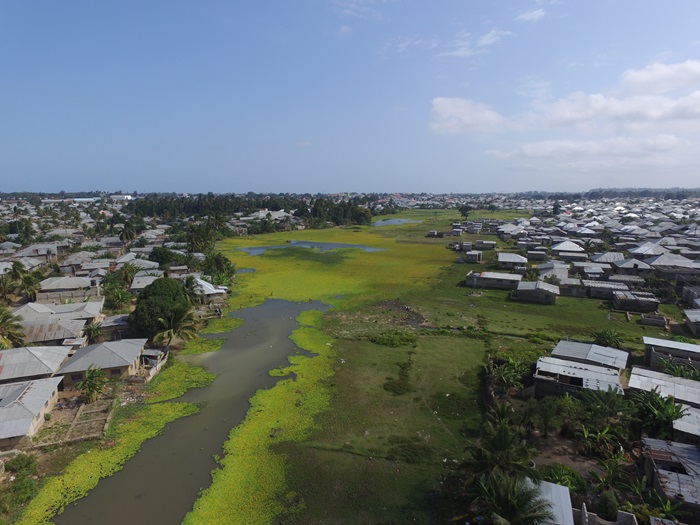
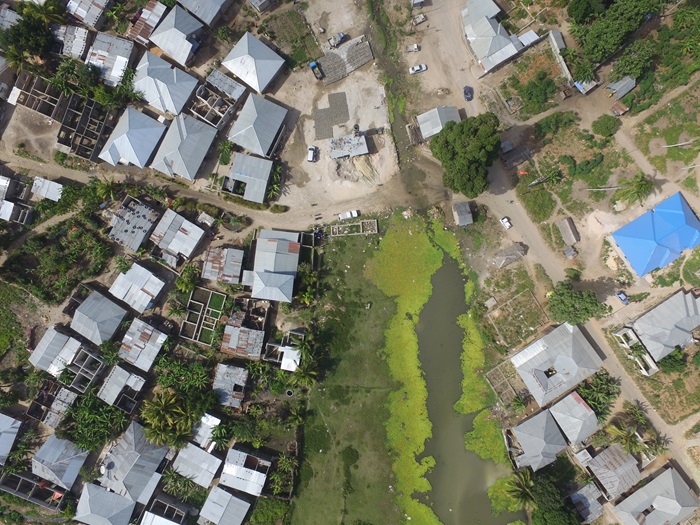
“To make further progress, we need to think outside the home. Many of the mosquitoes that continue to transmit malaria now bite outdoors, beyond the reach of conventional indoor‑targeted interventions. That means taking the fight to the mosquitos themselves, by finding the water bodies where they breed and eliminating larvae before they mature into disease-transmitting adults. Identifying these breeding sites, however, is not as straightforward as it sounds – and that is where geographers come in.”
A new way of seeing
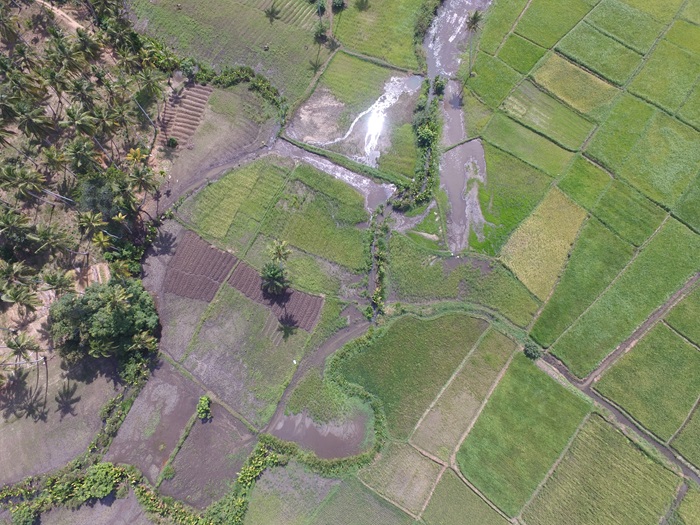
Dr Hardy’s latest project brings together drones, satellite imagery and artificial intelligence to address this challenge at scale.
Advanced drones equipped with near‑infrared and thermal sensors will be deployed to detect water bodies—even in complex environments such as rice paddies, swamps, and areas masked by dense aquatic vegetation or grass canopies.
Satellite imagery will provide broader environmental context across Zanzibar’s landscape, while Artificial Intelligence will be used to analyse both drone and satellite data to identify likely mosquito breeding habitats.
The insights provided by these combined technologies will enable large-scale detection of aquatic habitats that would traditionally require weeks of physical surveying, allowing interventions to be implemented earlier and more precisely.
Dr Hardy describes the approach as “reinventing mosquito control”—a leap forward in precision, speed and scale for mapping malaria hotspots.
Building on years of research
Dr Hardy’s expertise draws on a long track record of applying remote-sensing technologies—from satellites to crewed aircraft to drones—to map landscapes and ecological risks.
His previous research included hydrological flood modelling to identify malaria habitats in Zambia, and early proof of concept projects using drones and smartphone technology to support malaria habitat mapping in Zanzibar. These projects have helped refine the methods and tools now being deployed.
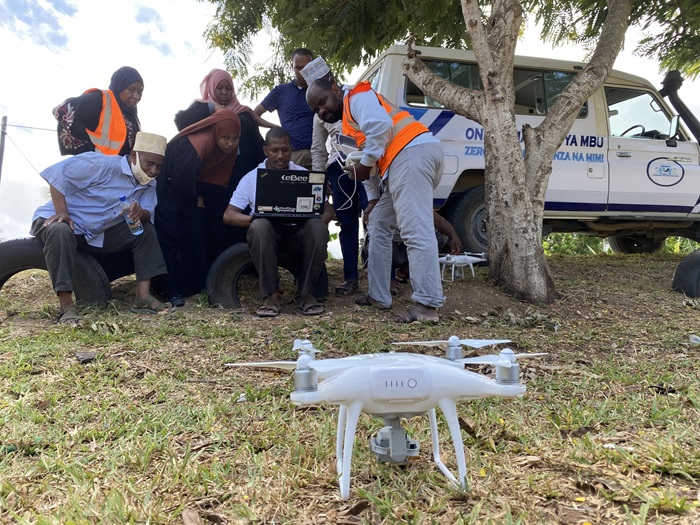
Crucially, the current initiative integrates technological innovation with community‑centred approaches. Local teams in Zanzibar will be trained to use the digital mapping tools, recognise larval habitats, and carry out larval-source management. This means that this technology-led approach is owned and operated locally, without reliance on outside support, supporting long‑term sustainability.
A blueprint for Africa and beyond
Using Zanzibar as the testbed, the project aims to create a toolkit that can be used in malaria‑affected regions worldwide. This will include a central digital dashboard for planning surveillance and treatment, a smartphone app to support field teams in mapping and spraying, and open-source AI models for identifying aquatic mosquito habitats.
As climate change, urbanisation, and evolving mosquito behaviours complicate malaria elimination efforts, these flexible, data‑driven approaches are becoming increasingly important. The ability to scan large landscapes at relatively low cost and pinpoint hidden breeding sites is a powerful new tool for programmes that are aiming to tackle malaria under pressure.
A more targeted future for malaria control
Rather than taking the place of existing efforts to stamp out the disease, Dr Hardy’s work is designed to strengthen them—by developing new ways to generate the intelligence needed to deploy resources where they may have the greatest impact.
By combining local expertise with drone technology, satellite data and artificial intelligence, the project is exploring how malaria control could become more targeted, efficient and sustainable.
As Zanzibar moves closer to its elimination goals, this approach has the potential to inform future strategies in other regions facing similar challenges—one that focuses not only on protecting people from mosquitoes, but on disrupting transmission at its source.
Further Information
Use the following links to find out more about Dr Andy Hardy’s research:
Get in touch
As a University, we’re always keen to share our knowledge and expertise more widely for the benefit of society. If you’d like to find out more or explore how you can collaborate with our researchers, get in touch with our dedicated team of staff in the Department of Research, Business and Innovation. We’d love to hear from you. Just drop an e-mail to: